
THE LOW ANTHEM KNOW WHO BUTTERS THEIR BREAD
posted in: Music News
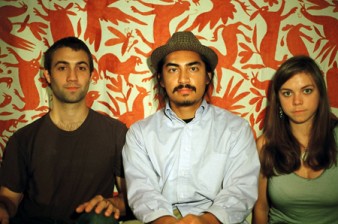
The Low Anthem stay hungry for your love
Ask any musician and they’ll tell you that all they want is to be able to quit their day job and have their music support them. For the artist already at that benchmark, they know who is the boss of them”the fans. As the collective “boss,” the fans write the paychecks through ticket, download and merch purchases. Sometimes bands get caught up in the glory of all night drives and cheap motel rooms, overlooking how awesome it is when 20 people make the effort to be at the gig. Granted, it’s a bummer to look out from the stage and face a room that hasn’t sold out. But it’s an even bigger bummer to be in the audience and know that the band is pissed off”like the fact that the fans who are there aren’t good enough. Not true in the world of The Low Anthem; they know who butters their bread. Thankful for every loving spoonful, the Rhode Island natives punched their last time clock roughly 16 months ago and are grateful for the legion of bosses who support their music.
If you’re not familiar with their sound, the band’s MySpace page describes their ethos as, “new songs that come from old songs. vibe. providence, RI. typewriters. folk art. corn-dogs. mini-van. gospel influence. wood bats. old-time headwear. not jaded: music that is music. not an advertisement. word of mouth. drink of mouth. bourbon…”. Whatever it means, the result is music so haunting and sweetly soul-searching that the trio deserves a raise.
Our resident tastemaker, Jay Sweet, caught up with The Low Anthem’s Ben Knox Miller, cracking open the nut that is the world of a working musician.
JS: Speaking to Ben Knox Miller of The Low Anthem who is graciously talking to us from a sleepy van ride. What’s it been like in the last 16 moths for you, as far as becoming a career musician, where you can quit all your day jobs and focus 100% on music?
BKM: Things have changed. We started 16 months ago as a duo. We were doing bar gigs and residencies in a few local towns ”Providence where we lived, Boston, New York, and just trying to make enough money playing in certain places that we could get to by car to just pay our rent. Once we figured out how to play in a few towns we started branching out a little bit, all very slowly, just doing whatever we could, booking ourselves. We’ve had some great luck with different national publications that found our new record O My God Charlie Darwin… a great booking agent that was excited about the project that wanted to get on board and help out and very quickly, we’ve just gotten so many offers to travel to different crazy parts of the world. We understand how incredible that opportunity is so every time we are just saying “yes” to every option that comes up.
JS: And you told me yesterday that saying “yes,” although extremely exhausting, keeps opening doors. Is that accurate?
BKM: Yup, any one of these gigs that we’re now playing regularly is a gig that we would have died for 2 years ago.
JS: You’re a believer in “hard work pays off.” For a lot of the younger bands on OurStage, that’s the type of wisdom they need to hear. If you just keep at it and do your thing it can pay off.
BKM: And a lot of rough nights too. If you’re saying yes all the time and you’re not being terribly selective, you’ll put yourself in some venues where you’ll get eaten alive by a rowdy bar crowd or whatever the case may be. We had our shows [like that] so we learned to have some humor about it and take whatever we could from the night.
JS: You once told me that you should always be thankful to the 20 people you’re playing to, not upset about the 20 people you’re not playing to. I think that’s an incredible line for people to remember.
BKM: Musicians get so worried about the draw at their shows. I’ve seen a lot of musicians just get in a foul mood because they think there should be more people there and they don’t know why there aren’t. They ruin the show by bringing that attitude into it, and the people that you’re ruining the show for are the people that did show up!
JS: That couldn’t be more true. I’ve had long conversations with Wayne Coyne from the Flaming Lips and the Robinson brothers from the Black Crowes, even Trey Anastasio from the Phish, about some of their bust nights, and I think this is why the bands I just mentioned have the rabid following they do. Some of the best nights they’ve ever played are to the weakest audiences at the smallest venues. They could have gone in with this horrible attitude, but if you wow over those 20 people, the next time you go to that town there will be more people.
BKM: Is Trey Anastasio complaining about his draw, because that doesn’t seem fair to me. (laughs)
JS: You also mentioned something that I really thought a lot about last night. I asked you, since you’ve had some amazing success playing festivals like Bonnaroo, Newport Folk Festival, Lollapalooza, etc., if there was a piece of advice you wish you had been given earlier. So, 30 years from now, if you could give some advice back to a younger you, what would it be?
BKM: We went through this because we worked so hard to get people to listen to our music. So many people do [work hard], they’re out there hustling, playing every night, collecting names on a mailing list. That’s not what you’re in it for, but that becomes part of the game that you play. I think for some artists that can sort of derail your sense of what the point is. You get so consumed with the gross of the band, really the business side of things, you forget that that’s irrelevant to why you want to be doing it in the first place. The only place you can really consistently look to for energy and a sense of why you’re doing what you’re doing ”why it matters to you”[is to] look to the songs and to the music. If those can’t bring you to that place, if you can’t have that self-affirming almost religious connection to these songs, whatever kind of music it is ”what’s the point? What’s the point of being successful with something that you’re disconnected from? So to younger artists, and to myself, I give myself this advice too: You gotta make sure the music is really alive and just let everything else be secondary.