
Backtracking Forward: A Sampling Of History
posted in: Features
 An expansive vinyl collection can serve many purposes for its owner. As an appreciator of a diverse playlist, thousands of records represent a myriad of tracks spanning multiple decades. Jumping from swing to blues to death metal to classical is done with the greatest of ease, and no shuffle button. From a musician’s standpoint” in this case DJs, producers, turntablists ” a comprehensive collection of records provides an endless supply of material to cut, paste and extrapolate upon. Hidden drum breaks, dialogue, guitar riffs and vocals sped to 45rpm lay deep within microscopic black grooves. For the past three decades, the creation of music has been remarkably influenced by the advent of the sample but as awareness of the practice rose, so did the eyes of the recording industry and the law.
The actual art of taking audio pieces from recordings and using them in new recordings had been around since the 1960s on a small level but the practice of sampling other records with the intention of creating music for commercial release did not come on strong until the 1980s with the rise of rap and hip hop. Legends like DJ Kool Herc and Grandmaster Flash had been keen on samples and breakbeats throughout the 1970s but merely used them during live DJ performances, not for commercial release.
The nuances of music law and copyright infringement can be dizzying to digest and understand. Many cases have passed through the courts that have set different precedents and contemporary cases result in laws continuing to evolve. One thing has become distinctly clear though”clearing samples for a commercial release can become disgustingly expensive and some artist’s sampling budgets used to exceed the cost to record the actual album. As lawsuits increased over time and payouts became greater, many labels opted to no longer release a sample heavy album and artists continue to utilize alternative methods to get around the dicey issue of using someone’s work.
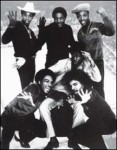
The SugarHill Gang
In order to wrap your hands around the whole sampling debate, it must be understood the different ways that artists use a pre-existing composition or recorded piece to create a new piece of music and how the law interprets that. An early example revolves around the legendary hip hop 12 single Rapper’s Delight, released on Sugar Hill Records in 1979 by The Sugarhill Gang. The backing band at Sugar Hill took the rhythm of the Chic song Good Times, released only two months prior, and re-recorded it themselves with Fab Five Freddy rapping over the track. This is a case of interpolation where the musician takes an already existing composition of musical notes and extrapolates upon it, using the same rhythm but fleshing it out more and creating a new recording. When Chic discovered this on the commercially successful Rapper’s Delight 12, a legal battle ensued that resulted in the composers of “Good Times” receiving 100 percent of the publishing rights to “Rapper’s Delight.” This is one of many examples of the worst case scenario, where creators of a song lose both their credit and royalties because they did not receive clearance.
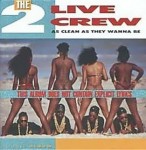
Music Legend Roy Orbison vs. 2 Live Crew
One aspect of music sampling and interpolation that has a little breathing room is the creation of a song parody. Weird Al Yankovic has been recording his offbeat parodies of popular songs for almost three decades now and has rarely run into trouble because of the fair use provision under copyright law. Recording parodies of someone else’s material does not infringe on copyrights and this is upheld in court most of the time. This differs from doing an exact cover of an artist’s song, where permission is needed and copyrights are upheld. This provision was contested when the raucous hip hop group 2 Live Crew recorded the song Pretty Woman in 1989 for their album As Clean As They Wanna Be. The song, originally released by Roy Orbison in 1964 as Oh, Pretty Woman, was reworked by 2 Live Crew and they sampled the bass, guitar and drums but changed the lyrics. Orbison and company sued the rap group but initially lost the lawsuit in court where it was said that 2 Live Crew’s use of the song was a parody and protected under the fair use provision.
The most contested and popular form of music copyright infringement in the law’s eyes is taking a previously recorded work and using it on a new composition. Sampling another artist’s record is synonymous with the hip hop movement and also played a strong role in the underground electronic scene as well. As a constructor of music, digging for samples on vinyl LP records is a labor of love. Depending on what is needed, everything is fair game- drums, bass, horns, strings, vocals, abstract noise, etc. Whether its slowed down, sped up, backwards or distorted every which way possible, taking that piece from a record for commercial use on another record without permission and compensation is illegal.
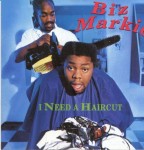
Biz Markie's LP I Need A Haircut Was Pulled Off The Market
Countless cases have been settled in and out of court regarding royalties and copyright infringement for samples. De La Soul’s unauthorized sample from the 1969 Turtle’s song You Showed Me on their seminal debut 3 Feet High and Rising prompted a legal mess that resulted in thousands of dollars being paid out. Biz Markie used an uncleared Gilbert O’Sullivan sample in 1991 on his LP I Need A Haircut which resulted in the album being pulled off the market and all copies recalled. Once more artists showed up in court and lost, it opened the doors for countless musicians to speak out against their material being used illegally. Smaller, independent releases have the ability to fly under the radar sometimes but in today’s information age, it becomes increasingly harder to go unnoticed. Obvious samples have already been popularized and often overused so the quest of the hardcore sampler is fueled by the desire to find something so obscure that placement in your track will go unnoticed by the original creators who may look to receive compensation via royalties and publishing credits. In many cases though, there is no information on the books regarding particularly unknown records and their creators, leaving a grey area of limbo until someone speaks up.
Rather than navigating the treacherous and expensive turf of sampling copyrighted recordings, many artists have turned to the Internet in search of pre-cleared and readily available audios. Countless websites have popped up over the years that offer music, spoken word, instrumentals and sound effects uploaded by users that are 100 percent free and cleared for use. Check out some of the sites below for an eclectic sampling of sounds.
http://www.archive.org/details/audio
Looking to get some samples cleared before putting out an independent album? While most major labels have divisions that handle sample clearance and copyright issues, a number of companies have set up shop to help independent artists.
http://www.sampleclearance.com
http://www.creativeclearance.com/
http://www.themusicbridge.com/
Keep Digging!
-Gregorious-