
Wanderlust Audio: Serbia
posted in: Features
 The definition of success as a musician is and will always be subjective. Some bands strive for multi-platinum records, while others are content just composing great music with friends and playing enough gigs to make a living. Serbian rockers Art Diler (Radio BG202’s 2009 Debut Album of the Year) fall into the latter category. Being an artist of any kind in a war-torn country is difficult enough, especially when up to 97% of the music in that country is pirated. But, in a refreshing change of pace, money is nothing but colorful paper to these enthusiastic musicians; it’s the art that matters! Continue reading to learn more about the music industry and path to success in Serbia!
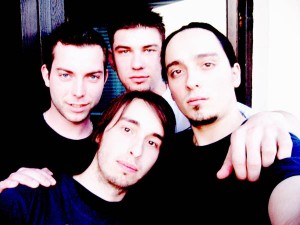
Art Diler
AR: Tell me about the recent history of pop music in Serbia.
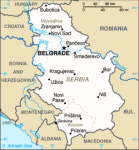 AD: Ever since RNR was created, many music orientations influenced mainstream music. As the years went by, beginning in the ’60s, rock music began to have an increasingly hard sound. Rock ˜n’ roll, heavy meta, death metal¦ and a million subgroups thereof. The situation was the same in our country as well, except that our rock scene was behind the American and British scenes. This does not mean under any circumstance that we didn’t have good rock bands and authors. I personally look at it from the standpoint that I like to call why no Yugoslav band made it in Europe. There is simply not a single name that will be remembered in any world encyclopedia! In my opinion, the only bands to meet the criterion to at least some extent (from Eastern Europe) are Gorki Park from Russia and Omega from Hungary. One-hit wonders, but wonders nonetheless. This gave them entry into the world rock history books. In the 1970s and 1980s our country had quality bands that played good live music and had quality recorded material. Smak (Doom), Pop Masina (Pop Machine), EKV (Katherine the Great), Idoli (Idols), Oktobar 1864 (October 1864), Riblja Corba (Fish Stew) to name a few. Bosnia had a band called Bijelo Dugme (White Button), that is the most popular Balkan rock band of all time. The Croats had phenomenal bands such as Parni Valjak (Steam Roller), Prljavo Kazaliste (Dirty Theater), Haustor (Storage), and Slovenia had a very strong punk scene. With the breakup of Yugoslavia, the music scene of Serbia changed as well.
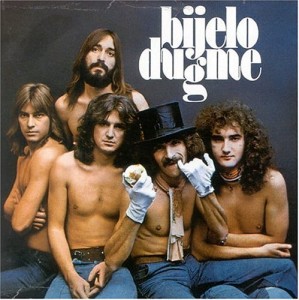
Bosnia's White Button
The early 1990s brought to life a turbo-folk scene that achieved immense popularity within only a couple of years, overtaking rock music and dominating the pop scene. The media, unfortunately, dictated wrong things and rock music lost even more of its once-leading role in the society. During the harshest of sanctions (economic sanctions instituted to Serbia and Montenegro, then called Federal Republic of Yugoslavia, on the account of Milosevic’s dictatorship and ethnic crimes committed during the Yugoslav civil war) rock bands still functioned and kept making big hits.
AR: And Today?
Turbo-folk artist Ceca
AD: Today’s music scene is largely alternative. I’d like to divide it into rock-metal, turbo folk-ethnic, alternative and techno. There are many young bands that are actively working. Serbia today has quality performers that sing in both Serbian and English. I think we (Serbia) are very close to making it into European mainstream or rock. Today Van Gogh is the most successful band that has gone beyond our national borders, I can only hope this lasts some substantial time instead of falling into the oblivion of the Balkan Peninsula after only a couple of years. In my opinion, the best rock band of the old Yugoslavia was EKV (Catherine the Great). Milan Mladenovic is our Gilmore. He was the one with the best and most creative ideas.
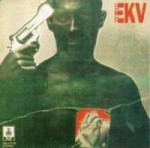
Serbian legends Catherine the Great
In music terms, it was very pleasant to the ear and their influence lasted until the end of the 1980s, but stood not as well as turbo-folk and other forms of trash music. The media is a big machine ” they made the turbo-folk into what it is today. EKV is a band that will never again appear in our region. Since I mostly follow the rock scene I cannot provide a good critique of other forms of music. However, I can bash on turbo-folk! For this is the total scum and the point of all lyrics of this genre relates to unimportant things in life: superficial love, money, standard and di*king around.
AR: How did your band come to be?
AD: Art Diler (Art Dealer in English) was created in June 2006, after Marko Blagojevic (lead singer) came to my home as I was already working on some demo songs, after which he said Let’s make a HIT! The following year, our song was the Hit of the Year of the national radio BG202! Art Diler has four members (Marko Blagojevic, Nenad Stojkovic, Bojan Stevanovic, and Marko Veljkovic) who have known each other for 11 years and have been great friends. That’s how we started playing ” Art Diler is like a family! We won a special award at the famous and the only rock festival of such kind called the Zajecar Guitar Show (2007). In 2009 we were named the Best Debut Album of the Year, and received much other appraisal.
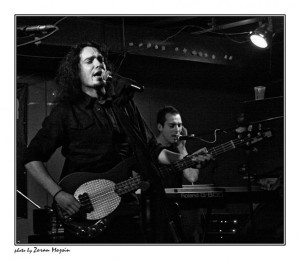
Art Diler live
AR: Is there a common benchmark most Serbian bands must reach before they are considered to have made it?
AD: Success is a relative matter. When we were babies, even walking was a major success, and then not wetting your pants. It’s the same way with music! When you start playing an instrument, your first major success is to have a band of your own, and then you dream of playing at the local club, and open up higher goals for yourself. I do think there’s a line of pleasure, after which you’re not allowed to give up, you can’t fall if you’ve reached a certain level. You’ve got to keep going forward. There are plenty of good bands around Serbia that should be more than pleased with their live performances, but not enough media space is given to them. It’s very hard to achieve commercial success in Serbia without enough money”  there’s simply a price to become an instant star! On the other hand, I do believe that, if Art Diler were to stand in line with most similar global bands in a club with good equipment, we would fair well.
AR: Do most pop artists in Serbia write their own songs, or are there professional songwriters that do this for them?
AD: There really are no rules. I vote for a good song, no matter who it comes from. I do think that in all alternative branches of music, apart from the imposed mainstream of Serbia, the artists are the songwriters as well.
AR: Any new genres reaching the top of the charts?
AD: The new wave of music is this alternative rock I spoke of before. B92 (a progressive radio and TV station) has its own list ” Jelen Top 10. A band called SARS is at the moment the most famous one because it made the ultra-mega-hit called Budjav Lebac (Moldy Bread). However, I can say with confidence that even their other songs are very pleasant to be heard. Naturally, they boast plenty of quality. This stream includes slight additions of blues, rock, punk but once you put all this together you create a new stream ” avant-guard, new wave or whatever you want to call it. WELCOME TO THE NEW MILLENNIUM!
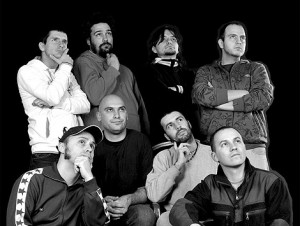
SARS
AR: Do people still buy music in physical format or has all purchasing shifted to the Internet?
AD: Let me try and briefly address this issue. The trend of buying physical media in Serbia dropped many years ago, as is the case in the entire world. The artists are well aware of this, and it has already come to the point where they don’t expect any revenues from selling CDs and therefore, among publishing houses, the CDs are considered as a marketing tool. The production cost of these CDs is very low and therefore the consumers think that the retail price ought to be low as well. However, what they fail to realize is that the price is also supposed to encompass the author’s hard work and time. Speaking of buying CDs off the Internet, which I chuckled when I read, because Serbs would rather find a song of poor quality and an advertisement in the middle of the song (ripped audio versions). People here are used to have low demands in life in general, and a downgraded system of values.
AR: To what extent has illegal downloading impaired the Serbian Industry? Is most money made from touring?
AD: After handing out CDs as promotional material, the performers have only one way of making some money: through tours and performances in clubs and bars. In this way, hopefully the performers will be able to pay the authors for the material (if it’s not their own). Again, the only problem is created with charging the author work. On the other hand, downloading has lead to another aspect: in the monopolistic market of Serbia, some authors made a breakthrough who never stood a chance otherwise.
AR: What is the general geographical extent of most Serbian bands’ tours? Do they span the entire continent, stay within the Balkans, or remain within Serbia?
AD: As far as Serbian performers go in general, they are always well-accepted in the ex-YU countries, and in the Balkans in general. Currently though, performers of the imposed mainstream music (note: turbo-folk of which was spoken before), that is accepted nowhere else, for a good reason, go around the world wherever significant Serbian diaspora is present (Germany, Austria, Switzerland, Bosnia and Herzegovina, Montenegro, France, US, Australia, Canada, Italy, Sweden, etc.). As far as rock bands go, the situation is in a state of limbo. There are quality bands, but not a quality national scene. In simple words, the former solid grounds of rock have been destroyed, and there is currently no strong support to build upon the selection of bands. We fight the best we can, and find some people of good will from the older generation who are more nostalgic and more supportive of our goals. There is a saying in Serbia: There’s no bread in rock music. It’s all about pure enthusiasm! Mostly we have to find alternative ways of income in order to be rock musicians. The wider Balkans region is a common performance area for many rock bands, but rarely something beyond that.
AR: What’s next for you guys?
ΑD: We already have arranged performances around Serbia and several European countries (Bosnia and Herzegovina, FYRO Macedonia, Germany, Switzerland). After summer live performance session, we’re entering the studio once again! Since we published our first CD for the RTS-PGP in June 2009, we’d like to prepare another single by this summer before the new CD comes out, hopefully in the fall. All options are open¦
Not surprisingly, Serbia’s representation on OurStage consists largely of hard rock bands. Check out the playlist below to hear some brutal Balkan rock! Stay tuned for the next edition of “Wanderlust Audio,” where I’ll be writing on the scene of Istanbul, Turkey!