
Wanderlust Audio: Turkey
posted in: Features
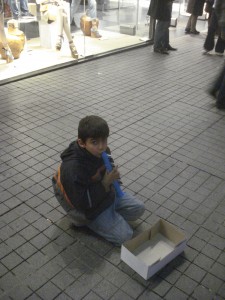
 Istanbul is often described as the crossroads of many cultures, and for good reason. The Bosphorous strait, the historically-rich, geographical dissecting force between Europe and Asia, runs swiftly through the modernized downtown where women in burkas walk side by side with teens wearing the latest skin baring fashion. Tourists from all over the world come to see the famous Blue Mosque and Hagia Sophia while fundamental Muslims attend their call to prayer 5 times a day. Musically, buskers ranging from children blowing into recorders to suave saxophonists line the busiest streets in town hoping to score a quick buck (another universal trait of music “ street side musicians are always broke). As can be imagined, such cultural dichotomy leads to clashing opinions and practices, even on the topic of music.
 Asking around gave me the impression that most music enthusiasts around Istanbul either like modern music or traditional music. Traditional Turkish music sounds just like you would expect it to. The melodies are often played by stringed instruments like the sitar, baÄŸlama and kemení§e, and the rhythms structured around gentle hand percussion beating odd time signatures. Of course, the lyrical content is largely spiritual. So it’s easy to see why most people feel combining the two styles takes away from each and results in some sort of lackluster compromise. That being said, most of the music on top of the charts in Turkey right now is either traditional or modern pop/ rock. Interestingly enough, the Number 1 album right now is the soundtrack to a movie about Turkish folk music. Strolling into the record store on the main drag in Istanbul, I was greeted by wonderfully low prices. At the time this is being written, 1 Turkish Lira is equivalent to $1.52 US dollars. So, a CD (with liner notes, photos and all) that costs 13 Turkish Lira comes to $8.5 USD. And, surprise surprise, the employees working the floor at the shop were happy to tell me that people still purchase plenty of CDs in Turkey (the store was crawling), and that the Internet and illegal downloading has had little impact on physical music sales. They also told me the music culture in Turkey is oriented around albums rather than singles. If this really is the case, then it leads me to believe that pop artists still produce solid albums with more than one well-composed song, an idea that’s been dissipating in America for a while now. Perhaps our country could take a cue from the Turks¦
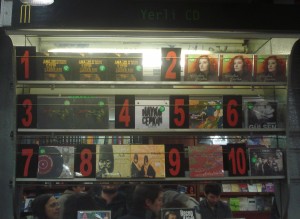
Check out this picture (above) of the sale racks in the store. See the numbers next to each album? Those are their current rankings on the charts. Clever yes, but this only perpetuates the notion of consumers purchasing what’s hot at the moment. About half the albums pictured here are traditional Turkish music and the other half are modernized, western-sounding pop.
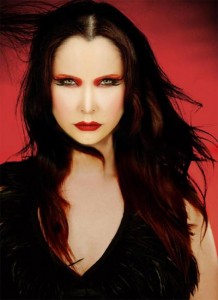
Åžebnem Ferah
I fumbled around with the Top 10 albums for a while, and after realizing that I had no choice but to judge a CD by its cover, picked out Number 3. The artist behind this cover turned out to be Turkish superstar Åžebnem Ferah on her critically-acclaimed new release, My Name is Forest. Judging strictly by her looks, my mind drew immediate comparisons to Amy Lee of Evanescence, a comparison I’ve since discovered is very common. They both emit the rebel angel in distress persona ” dark clothing, dark make up / lipstick verging on the brink of gothic, and they both use their beautiful voices to sing over hard rock songs. Åžebnem Ferah’s sound is like late 80s hairmetal reincarnated, this time with female vocals and lyrics about depression and destruction rather than partying.

Amy Lee
The instrumentation on this album is somewhat diverse, containing songs with accordion and piano, but most are structured around minimalist verses and guitar power chord choruses in which Ferah seizes the opportunity to display her soaring vocals and beautiful harmonizing ability. Musically, none of the songs on the album sound major, and if the lyrical translations I’ve read are correct, none of them ought to sound major. Yalniz (“Alone” in Turkish) is about what seems to be the saddest woman in the world:

My Name is Forest
“In my trembling chin/ the world is turned upside down/ no one can be upset like this/ eyes filled with tears.
In Serapmis, (“Mirage” in Turkish) things don’t look much better:
It was sunset when I realized it / All of my illusions were lying on the street / All I˜ve known to be true had flown out on the pavement / It was all just a mirage.
This is just one more instance of sorrow and disappointment being a universal theme in commercially successful pop songs.
Now, in any Islamic country, sex before marriage is generally a big no-no. You would assume that pop stars would dress more modestly but you would be wrong. The music videos on Music Television Türkiye are just as full of scantily clad women as the videos in America, and their story lines often depict a sensual love story with plenty of physical affection. This leads me to believe that image is just as important in furthering one’s musical career in Türkiye as it is in the western world. In fact, the music video culture is much more prevalent in Türkiye, as the success of many albums is defined by the popularity of any music video they’ve made. The first video played on MTV Türkiye was Nil Karaibrahimgil’s video “Peri.” Check it out below.
<!–
One cultural disparity adding to the enigmatic personality of Istanbul is the disparity between club music and dancing. Statistically 53% of Turkish women partake in sexual abstinence ” this number varies in America, but I’ve seen rates as low as 5%” so it’s safe to assume that sexual interaction between strangers at clubs will be minimal. This was correct. Not a single woman (unless they were American) danced with someone they weren’t evidently dating. While this all makes sense, one would assume the club music played would be less lyrically suggestive then their American club counterparts. False. The new house song Sex on the Beach must have played at least 3 times in the 2 hours during my club outing, and all the Turks sang along. At the top of their lungs. Interesting to say the least.
That’s it for Turkey. Check out the playlist below for some great Turkish acts right here on OurStage!