
Tune Up: Q&A with David Remedios
posted in: Features
 We’ve talked about a lot of techniques and gear in the Tune Up column, particularly regarding applications for recording and sound design/film scoring. When you think of sound design/scoring, the first thing that probably comes to mind is film. You may also think of video games or TV shows. However, one of the most difficult, important and creative applications for sound design is done for theatre.
This week, we’ve decided to bring you an interview with an extremely accomplished sound designer for performance arts and theatre. Most notably, Dave Remedios has been the head/resident sound designer for the American Repertory Theatre, designing sound for everything from classic repertoire like Shakespeare, to modern interpretations like Donnie Darko. Currently, Remedios is pursuing separate projects with groups like the Commonwealth Shakespeare Company and the Huntington Theatre Company. Check out what he had to say about sound design logistics, his work with the ART, as well as his techniques for upcoming plays like Othello.
OS: Sound design specifically for a theatre setting is much different than sound design for non-live media. What is typically your first step when approaching a new project?
DR: I read the script and try to have an initial discussion with the director to find out what direction they’re heading. I’ll also note what kind of imagery there is in the text to start to form ideas for an initial palette. Beyond that, I often draw inspiration from the scenic design, but it’s not until I’m in the room with the actors that I start to find what best supports what they’re doing.
 OS: The layout of a speaker system obviously has a huge role in determining your approach for designing ambience and such. How do you incorporate surround/speaker channel numbers into your sound design?
DR: It always depends on the capability of the venue, both in terms of inventory and budget, and where you can physically place speakers in the theatre. If I have to choose between surround positions or onstage specials, I will often opt for onstage positions. In the best situations, I have both surround and onstage positions to allow me to place sound wherever I want, and to help give dimension to the soundscape.
OS: Have you ever had a really tough moment where you had to completely revamp the surround layout before a show, because the speaker layout was different than you anticipated?
DR: Not really. I’m required to provide a speaker plot and patch list well before load-in, so the engineer can determine the feasibility of what I want. When I’m able, I will visit the theatre early on to see what they have in stock and where it can be placed. You often don’t have much flexibility where surrounds can be placed. Permanent positions are often already established, and if there aren’t any in place, house regulations can limit where speakers can be placed. If the surrounds are proving distracting for a part of the seating because of proximity, I will attenuate them.
OS: You’ve spoken before about sound collection and creating your own sound libraries for projects. Do you have a favorite ambience you’ve recorded or a favorite sound effect you’ve created?
DR: I carry a recorder wherever I go. I record lots of water noises, from which I get a lot of mileage, and ambiences from countrysides and towns and cities. I once recorded the HVAC ambience in an underground crypt which I have used in shows.
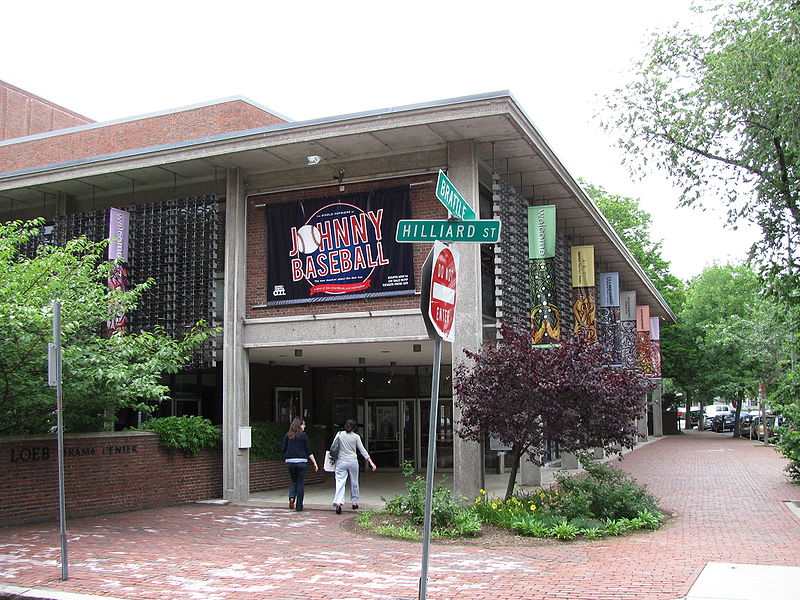 OS: Selecting one of your ART projects, you had to tackle a stage adaptation of Donnie Darko a couple years ago. What was the sound collection/arrangement process like for this?
DR: That was a project directed by Marcus Stern (associate director for ART), who is very specific about his sound design ideas. It was mostly realizing what he specified, but recording the actor playing Frank and tweaking his voice precisely and intelligibly was fun. I recorded him simultaneously with a Neumann M147 and a TLM103, which gave me slightly different mic colors and allowed me to try different de-tunings and processing on each take to best achieve the sound and clarity of the Rabbit’s voice.
OS: You’re currently pursuing your own endeavors, one of which is with the Commonwealth Shakespeare Company. How do you work technology and interesting sound environments into a more classic show like Othello?
DR: Once I started working in rehearsals for Othello, I decided that I would go abstract and play the psychology of the piece, rather than try to indicate setting or time period. So there’s lots of ambient beds that underscore speeches and scenes to help build tension. Musically, I decided to set Iago’s tavern songs and Desdemona’s “Willow Song” myself, and improvised some simple classical guitar pieces which I recorded myself to accompany the silent scene-lets devised for the top of show (the wedding vows) and entr’acte (the soldiers’ off-duty activities in the Cyprus afternoon).
Since the show is outdoors, you sacrifice the ability to locate sound to a specific place for the sake of getting the mix to as many people as possible in an open field. The actors are all miked, and the main concern is getting the text out clearly and as natural-sounding as possible over a PA that has to deliver to a vast seating area. The playback becomes a bit subservient to that necessity, so while there is a stereo image from the main speakers above the stage, it’s mono in the delay zones, whose primary function is to get the vocal mix to people who are sitting further away from the stage.
OS: Any concluding remarks or advice you’d like to give to an aspiring sound designer or audio engineer?
DR: As my sound design professor told me in college: we don’t have earlids, so always be aware of the sounds and their interactions around you in any environment. They may provide ideas for you down the road!